
Starting a vinyl record collection is one of the most rewarding hobbies you can pick up. There’s something irreplaceable about the ritual—sliding a record from its sleeve, placing the needle, and hearing music the way the artist intended it to be experienced. But if you’re new to the hobby, the sheer amount of terminology, equipment options, and unwritten rules can feel overwhelming.
This guide strips away the complexity and gives you everything you need to start collecting vinyl records confidently in 2026, whether your budget is $100 or $10,000.
Why Collect Vinyl in the Streaming Age?
Before diving into the how, it’s worth understanding the why. Vinyl collecting isn’t about convenience—it’s about intention.
- Sound quality: Properly pressed vinyl reproduces audio with a warmth and dynamic range that digital formats compress. The analog waveform captures nuances that 16-bit digital encoding can miss.
- The physical experience: Album artwork at 12” square, liner notes you can actually read, and the tactile satisfaction of curating a physical library.
- Active listening: Vinyl forces you to engage with music deliberately. You choose an album, commit to a side, and listen without algorithmic interruption.
- Community: Record shops, fairs, and online forums create connections with fellow music enthusiasts that streaming playlists simply don’t replicate.
- Value retention: Unlike digital purchases (which you license, not own), vinyl records are physical assets that can appreciate in value over time.
Step 1: Set Up Your Listening Station
You don’t need to spend thousands to get great sound from vinyl. Here’s what you actually need:
The Essential Components
| Component | Budget Pick | Mid-Range Pick | What It Does |
|---|---|---|---|
| Turntable | Audio-Technica AT-LP60X (~$150) | Audio-Technica AT-LP120X (~$300) | Spins the record and reads grooves via stylus |
| Amplifier/Receiver | Fosi Audio BT20A (~$70) | Yamaha A-S301 (~$350) | Powers speakers and may include phono preamp |
| Speakers | Edifier R1280T (~$100) | ELAC Debut B5.2 (~$250) | Converts electrical signal to sound |
Pro tip: Many modern turntables include a built-in phono preamp, which means you can connect directly to powered speakers and skip the separate amplifier entirely. The AT-LP60X and AT-LP120X both have this feature.
Common Beginner Mistakes to Avoid
- Never use a Crosley Cruiser or similar all-in-one players for serious listening. Their ceramic cartridges apply excessive tracking force (5-7g vs. the recommended 1.5-2g) and can damage your records over time.
- Don’t skip the anti-skate adjustment on manual turntables. Improper anti-skate causes uneven groove wear.
- Invest in a decent stylus before upgrading anything else. The stylus is the single component that makes the most difference in sound quality.
Step 2: Learn the Language
Vinyl collecting has its own vocabulary. Here are the essential terms you’ll encounter:
Key Terminology
- Pressing: A specific manufacture run of a record. The same album can have dozens of different pressings from different countries, years, and plants.
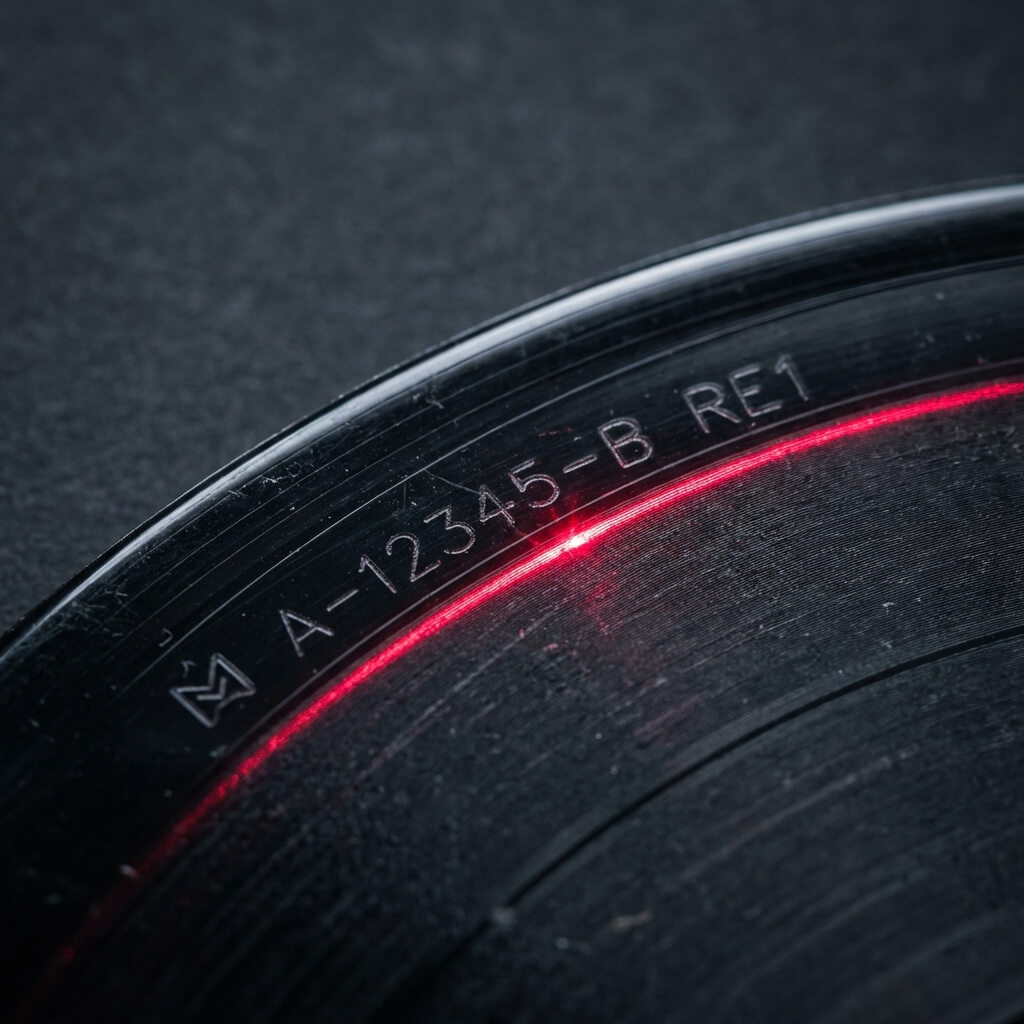
- Matrix number: Codes etched or stamped into the dead wax (the smooth area between the last groove and the label). These identify the specific pressing.
- Dead wax: The smooth, ungrooved area near the label. Contains matrix numbers, pressing plant codes, and sometimes engineer initials.
- First pressing: The initial manufacture run of a record, typically the most valuable edition.
- Reissue: A later pressing of a previously released album. Can range from faithful reproductions to inferior copies.
- Gatefold: A double-fold album cover that opens like a book, often containing additional artwork or liner notes.
- Inner sleeve: The protective sleeve that holds the record inside the outer cover. Original inners can significantly affect value.
- NM, VG+, VG, G: Condition grades from Near Mint to Good (see grading section below).
Step 3: Understand Record Grading
Condition is everything in vinyl collecting. A record’s grade directly determines its value and playback quality. The Goldmine Standard is the industry-accepted grading system:
| Grade | Abbreviation | What to Expect |
|---|---|---|
| Mint | M | Perfect, unplayed, still sealed |
| Near Mint | NM | Nearly perfect, minimal signs of handling |
| Very Good Plus | VG+ | Light surface marks, plays with minimal noise |
| Very Good | VG | Noticeable surface noise, visible wear |
| Good | G | Significant wear, plays through but with noise |
| Fair/Poor | F/P | Heavy damage, skips, or warping |
Important: For collecting purposes, VG+ is generally the minimum acceptable grade for records you intend to keep long-term. Below VG+, surface noise becomes noticeable and value drops significantly.
Grading Tips for Beginners
- Always grade conservatively. When in doubt, grade down. Over-grading is the fastest way to lose credibility as a seller or trader.
- Grade the record AND the cover separately. A NM record in a VG cover is written as NM/VG.
- Use proper lighting. Tilt the record under a strong light source to reveal surface marks invisible under normal lighting.
- Play-grade when possible. Visual grading doesn’t catch everything—a record that looks VG+ might have a skip caused by a deep but narrow scratch.
Step 4: Start Finding Records
Now for the fun part—actually building your collection. Here are the best sources for beginners:
Local Sources
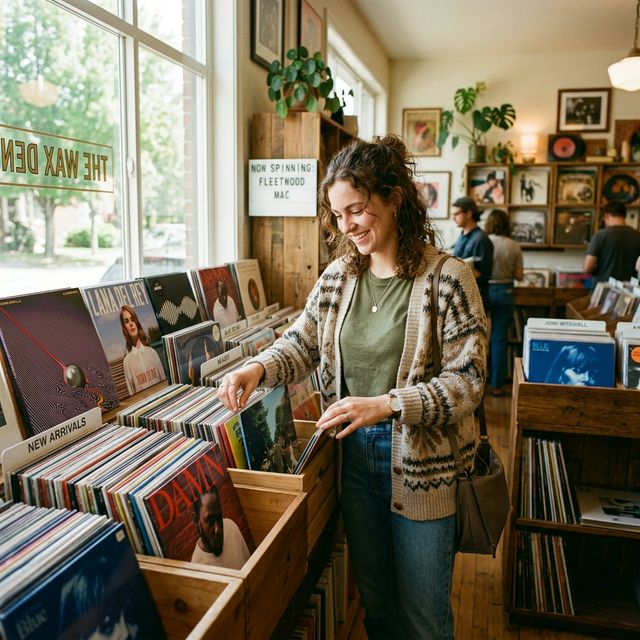
- Independent record shops: The best place to start. Staff are knowledgeable, records are usually graded accurately, and you can inspect before buying. Most shops offer fair prices on common titles and will negotiate on bulk purchases.
- Thrift stores (Goodwill, Salvation Army, Value Village): Hit or miss, but the thrill of finding a $200 record for $2 is what keeps collectors coming back. Check regularly—inventory turns over constantly.
- Estate sales and garage sales: Often the best source for well-preserved collections. Older collectors tend to store records properly, meaning better average condition.
- Record fairs and conventions: Concentrated access to hundreds of dealers. Prices can be competitive, especially late in the day when dealers prefer to sell rather than transport inventory home.
Online Sources
- Discogs Marketplace: The largest online vinyl marketplace. Seller ratings and detailed grading provide reasonable confidence in purchases, but always review a seller’s grading history.
- eBay: Best for rare and auction-worthy items. Use completed listings to verify market values before bidding.
- Specialized dealers: Genre-specific dealers (jazz, punk, electronic) often have the deepest inventory and most accurate grading in their niche.
Sourcing Strategy for Beginners
Start with records you actually want to listen to. Resist the urge to buy records purely because they’re “valuable” or “rare.” The foundation of every great collection is personal taste. You’ll develop market knowledge naturally as you explore genres and artists you genuinely enjoy.
Step 5: Store and Care for Your Collection
Proper storage is non-negotiable. Records damaged by improper storage lose both playback quality and monetary value.
Storage Best Practices
- Store records vertically, never stacked flat. Horizontal stacking causes warping from pressure.
- Use poly-lined inner sleeves to prevent static buildup and paper-dust contamination. Replace original paper inners with poly-lined sleeves for daily-player records.
- Keep records in outer plastic sleeves to protect cover artwork from ring wear and shelf friction.
- Maintain consistent temperature (65-70°F / 18-21°C) and low humidity (45-50%). Avoid attics, basements, and garages.
- Don’t pack records too tightly on shelves. This causes seam splits on covers and warping. Leave enough room to easily remove any record without friction.
Cleaning Essentials
| Method | Best For | Cost |
|---|---|---|
| Carbon fiber brush | Pre-play dust removal | $15-25 |
| Stylus cleaner brush | Keeping your needle clean | $10-15 |
| Spin-Clean Record Washer | Deep cleaning used records | $80 |
| Ultrasonic cleaner | Professional-grade restoration | $300+ |
Beginner recommendation: Start with a carbon fiber brush (use before every play) and a Spin-Clean for deep cleaning used purchases. These two tools will handle 95% of your cleaning needs.
Step 6: Catalog Your Collection
As your collection grows, tracking what you own becomes essential—for insurance, trading, and avoiding duplicate purchases.
Cataloging Options
- DiscSnap: Scan your records with your phone camera for instant identification and value tracking. Ideal for quickly cataloging large collections without manual data entry.
- Discogs: Manual entry into their database gives you detailed release information and portfolio value tracking.
- Spreadsheets: Simple but effective for smaller collections. Track title, artist, pressing, condition, purchase price, and current value.
Why Cataloging Matters
- Insurance documentation: If your collection is worth more than $1,000, proper documentation is essential for homeowner’s/renter’s insurance claims.
- Value tracking: Understanding what your collection is worth helps inform buying decisions and identifies opportunities.
- Duplicate prevention: Nothing worse than buying a record you already own (it happens more often than you’d think).
Step 7: Join the Community
Vinyl collecting is fundamentally social. The community is one of the hobby’s greatest strengths.
Where to Connect
- r/vinyl and r/VinylCollectors on Reddit: Active communities for discussion, identification help, buying/selling/trading.
- Local record shop events: Many shops host listening parties, Record Store Day events, and in-store performances.
- Discogs forums: Genre-specific discussion boards with incredibly knowledgeable members.
- Record fairs: Beyond buying, fairs are social events where collectors exchange knowledge and build relationships.
Frequently Asked Questions
How much does it cost to start collecting vinyl?
A functional setup (turntable, speakers, and a few records) can be assembled for $250-$400. The AT-LP60X turntable ($150) paired with powered speakers ($100) gives you quality playback without needing a separate amplifier. Budget $5-15 per record for common titles at thrift stores and used bins.
Are new vinyl records worth buying?
Absolutely. Modern pressings of classic albums (particularly those from labels like Mobile Fidelity, Analogue Productions, and Blue Note’s Tone Poet series) offer excellent sound quality. New vinyl also supports current artists directly. Just be aware that new vinyl typically doesn’t appreciate in value as quickly as verified original pressings.
How do I know if a record is a first pressing?
Check the matrix numbers etched into the dead wax area near the label. Cross-reference these with the Discogs database for the specific release. Label design variations, catalog numbers, and pressing plant codes also help identify editions. For faster identification, DiscSnap’s AI can visually identify pressings from a photo of the label or cover.
How many records should a beginner buy at once?
Start with 10-20 records you genuinely want to listen to. This gives you enough variety to enjoy the hobby while learning about condition assessment, pressing identification, and personal taste. Avoid the temptation to buy in bulk before you’ve developed your ear and evaluation skills.
Is it better to buy used or new vinyl?
Both have merit. Used records offer better value and the thrill of discovery, while new records guarantee condition and support artists. A healthy collection includes both. For investment purposes, verified original pressings (used) typically appreciate faster than modern reissues (new).
Start Your Collection Today
The best time to start collecting vinyl is now. Prices for many categories are still accessible, the community is welcoming, and the experience of listening to music on vinyl is genuinely transformative.
Don’t overthink it. Pick up a turntable, head to your nearest record shop, and choose something that speaks to you. The rest—the knowledge, the community, the thrill of the hunt—will follow naturally.
Download DiscSnap to instantly identify and catalog your growing collection, so you can spend less time researching and more time listening.